QMS Audit & Consultancy Management firm for Automobiles, Commercial Vehicles, earth movers and marine Industries sector.
FORGINGS
As a growing one stop shop IPAC have wide quality capable suppliers range in India for Forging and machining parts procurement services.
PRESS FORGINGS
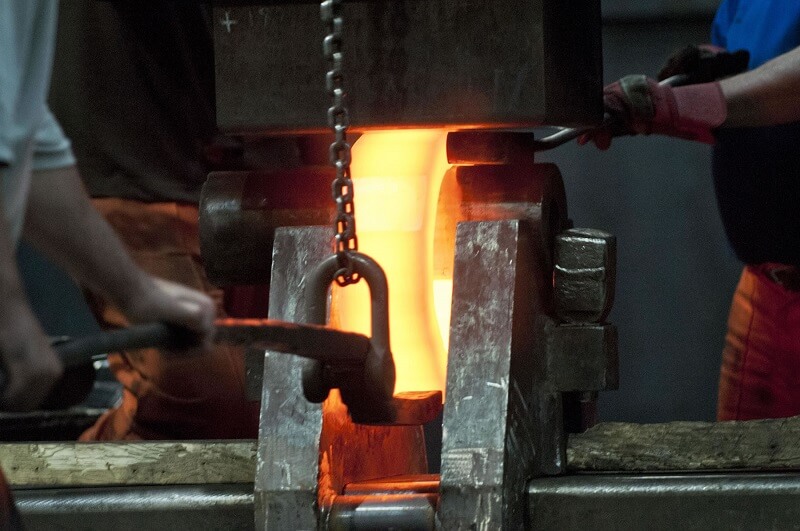
Forging presses are able to form stock metal preforms into high volumes of identical parts with a high degree of accuracy. It is a quick process that changes the shape and size, sometimes the properties, but never the volume of the metal.
Scrap metal and trim are often produced. Products like car wheels, bushings, gears, automobile axles, water valves, rocket nozzles, air craft structural components and kitchen sinks are produced by a hot or cold forging press.
Forging presses are alternatives to hammer and rolling forging, and uses two press rams that both move together in a linear motion and are able to produce 50 thousand tons of force at one time.
Ring Rolling Forging
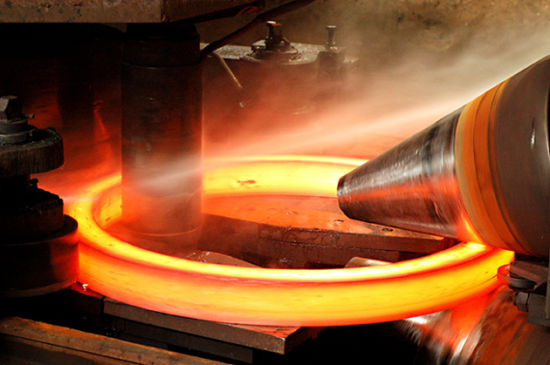
Ring Rolling Forging, also known as roll forming, is a forging technique that involves shaping a metal object with opposing rollers. Although roll forging uses rolls to achieve material deformation, it is a discrete process, not a continuous one, analogous to metal forging rather than metal rolling.
Ring forging is frequently done in a heated environment. The roll’s grooves are carefully designed to forge the part to the desired dimensions.
The forging geometry of the rings used to forge metal items is only visible on a small fraction of the diameter of the ring. Only a portion of a full ring revolution is required to forge the workpiece.
HAMMER FORGING
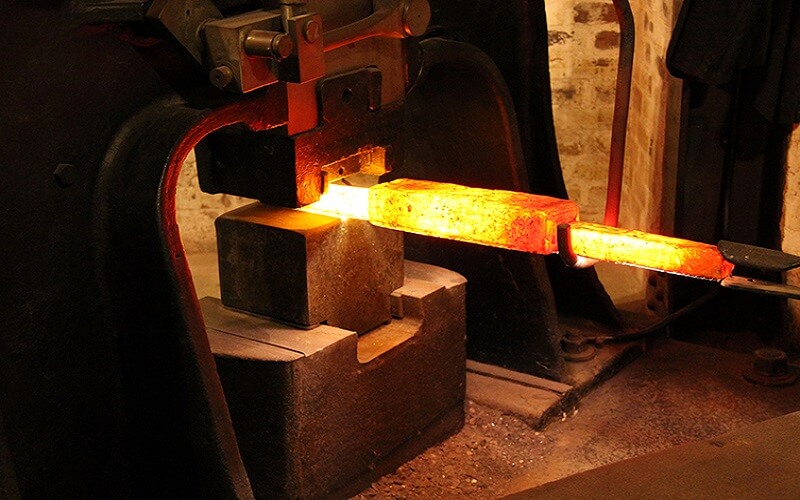
Hammer forging is the modern-day version of the pre-industrial blacksmiths work, with a hammer and chisel.
The action of the hammer is that of an instantaneous application of pressure in the form of a sudden repeated blow. This metal forming process works when a piece of metal is inserted into a die and then hammered until it has assumed the shape of the die, or it can be manipulated manually without a die. The lower die is a stationary part, while the upper part is a moving hammer dropped onto the workpiece to form it to a near-net shape. Hammer forgings have been continuously used for both OPEN DIE and impression die forging. They are generally considered the most flexible in the variety of forging operations.