QMS Audit & Consultancy Management firm for Automobiles, Commercial Vehicles, earth movers and marine Industries sector.
CASTINGS
IPAC is complete sourcing solution hub for the casting parts procurement from India with competition price, best in class quality satisfaction and on time delivery.
SAND CASTINGS
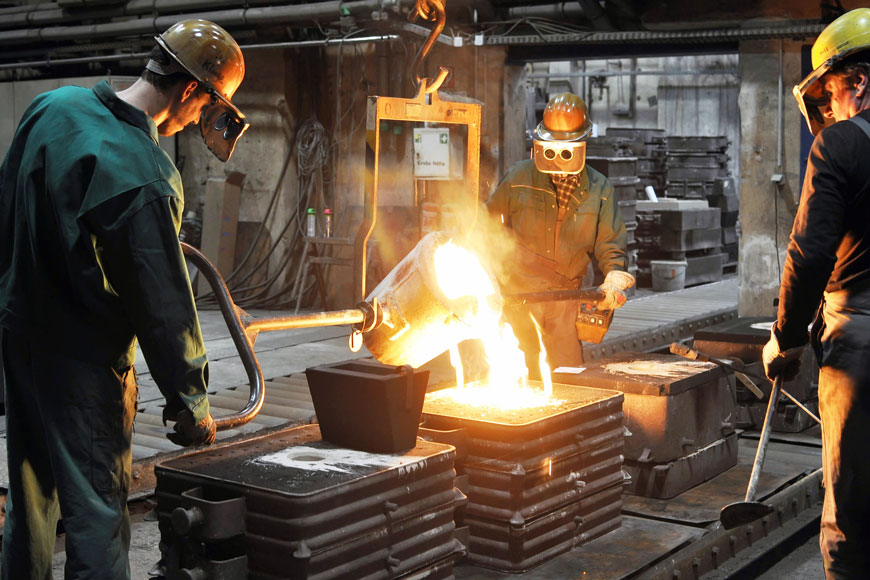
Sand Casting- Sand casting, also known as sand molded casting, is a metal casting process characterized by using sand as the mold material. Sand castings are produced in specialized factories called foundries.
Sand casting is used to produce a wide variety of metal components with complex geometries. These parts can vary greatly in size and weight, ranging from a couple grams to several tons. Some smaller sand cast parts include components as gears, pulleys, crankshafts, connecting rods, and propellers. Larger applications include housings for large equipment and heavy machine bases. Sand casting is also common in producing automobile components, such as engine blocks, engine manifolds, cylinder heads, and transmission cases.
DIE CASTINGS
Types of Metals used in Die Casting
Most die castings are made from non-ferrous metals. Depending on the type of metal being cast, a hot-or cold-chamber machine will be used.
Aluminum
Magnesium
Zinc
Brass
Copper
Die casting is an efficient and economical manufacturing process. It is used to produce geometrically complex metal parts that are
formed by reusable molds, called dies. These dies generally offer a long service life, and they are capable of producing visually appealing components.
The die casting process involves the use of a furnace, molten metal, a die casting machine and a die that has been custom-fabricated for the part to be cast. The metal is melted in the furnace and then the die casting machine injects that metal into the dies.
There are two main types of die casting machines:
Hot-chamber machines (used for alloys with low melting temperatures, such as zinc)
Cold-chamber machines (used for alloys with high melting temperatures, such as aluminum)
In both machine types, after the molten metal has been injected into the dies, the metal cools rapidly and solidifies into what becomes the final part, called the casting. Typically, that casting will be subjected to one or more finishing processes prior to final assembly.
INVESTMENT CASTINGS
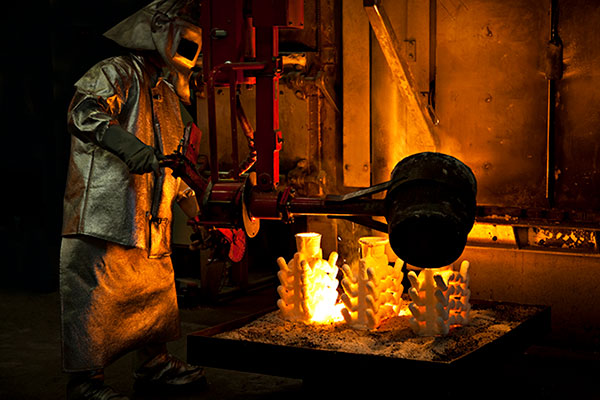
Investment Casting, also known as Lost Wax Casting, is a precision casting process that provides design flexibility and significant cost advantages. Investment Molding Process
The Investment Casting process involves pouring molten metal into a mold that has been created using a wax model. Once the mold is made, the wax model is melted and drained away. Hollow cores can be affected by using a heat-proof core that prevents the molten metal from totally filling the mold.
Investment Casting is generally used for small castings, though it can be used to produce much larger components.
Investment Casting Materials
Carbon Steel
Stainless Steel
Aluminum
Nickel
Ductile Iron
Grey Iron
Investment Casting Benefits
Mass production with precision.
For products your customers can count on, you need parts that are cast to last. Euro Metrics offers superior investment casting in a wide range of alloys for even the most intricate designs and complex geometries.